What Are You Looking For?

What is PA66 CF30 and How Does Carbon Fiber Modification Enhance Mechanical Properties for Industrial Use?
Global manufacturing industries continuously seek advanced engineering materials to optimize structural efficiency and energy consumption. Traditional structural metals like die-cast aluminum, zinc alloys, and machined steel have long dominated critical mechanical applications. However, modern engineering requirements demand lighter structural materials that maintain high strength under severe thermal and mechanical loads. Engineering thermoplastics have stepped into this role, offering scalable high-volume processing through injection molding while drastically reducing component weight. Polyamide 66, commonly known as PA66, serves as a highly versatile base polymer due to its inherent mechanical toughness, chemical resistance, and elevated melting temperature. To bridge the performance gap between unfilled plastics and structural metals, compounders incorporate high-modulus carbon fibers into the resin matrix. Specially engineered grades like PA66 CF30 for Industrial Use represent a significant advancement in lightweight materials engineering. Incorporating 30% short carbon fiber by weight creates a high-performance composite material capable of replacing heavy metal alloys in demanding operational environments. Consequently, design engineers across multiple industrial sectors rely on modified polyamide solutions to meet aggressive performance goals.
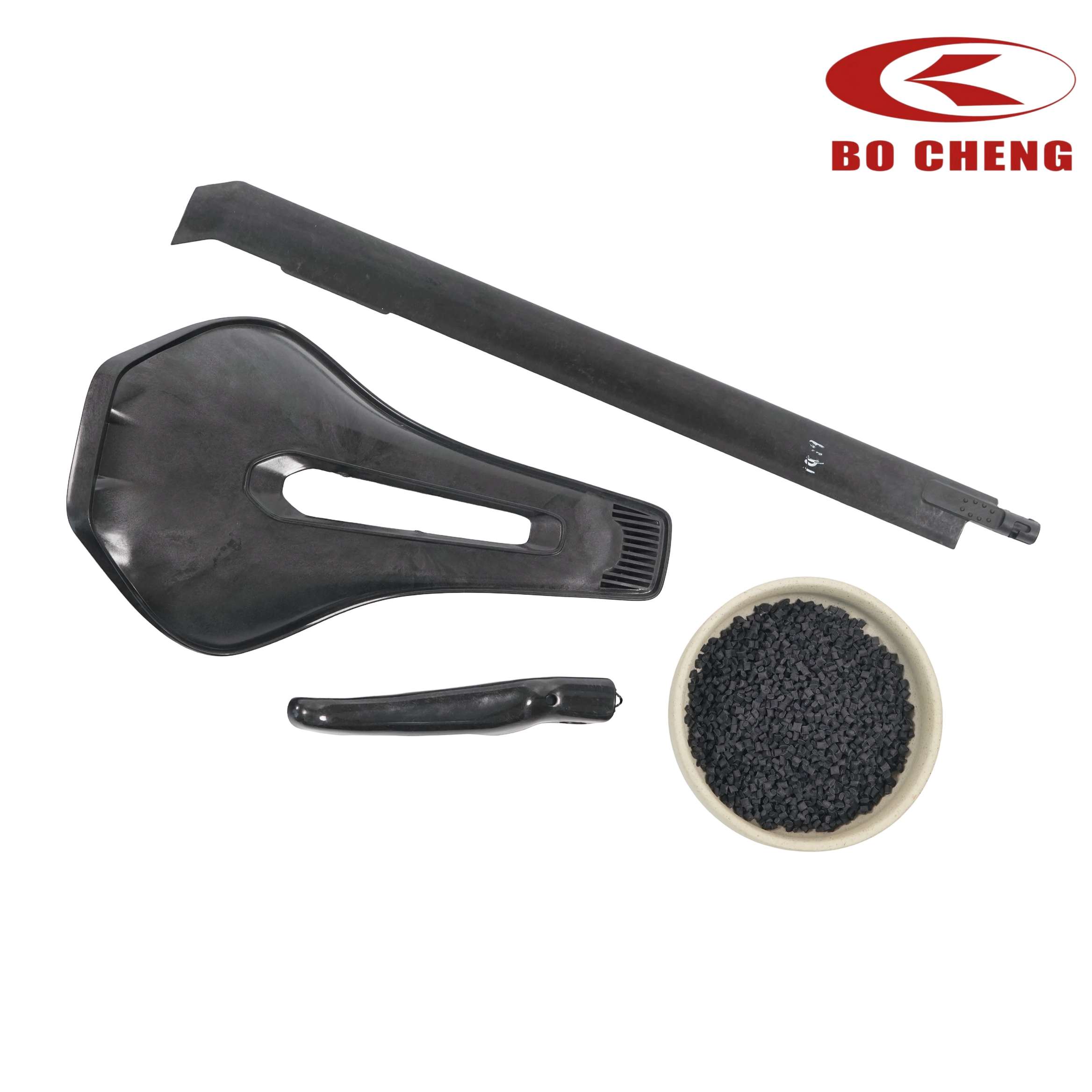
To understand the mechanical advantages of PA66 CF30, engineers must examine the microstructural differences between carbon fibers and glass fibers. Both additives reinforce the host polymer matrix by transferring mechanical loads across fiber-matrix interfaces. However, carbon fiber possesses significantly higher intrinsic stiffness and lower physical density compared to standard E-glass fiber. Consequently, a 30% carbon fiber compound achieves superior mechanical properties while simultaneously lowering the overall density of the final injection-molded component.
Specifically, standard PA66 GF30 exhibits a material density of approximately 1.35 to 1.38 grams per cubic centimeter. In contrast, PA66 CF30 maintains a noticeably lower density of roughly 1.28 to 1.30 grams per cubic centimeter. This density reduction yields immediate component weight savings, which directly benefits dynamic moving assemblies and airborne structures. Furthermore, carbon fibers offer exceptional specific strength and specific modulus, defined as mechanical strength and stiffness divided by material density. The microscopic carbon filaments form an interconnected load-bearing lattice within the PA66 matrix during melt processing, enabling efficient stress distribution.
In addition to density benefits, carbon fiber modification markedly improves dimensional stability. Polyamide resins naturally absorb ambient moisture, which typically leads to dimensional expansion and slight reduction in structural stiffness over time. Carbon fibers do not absorb water and exhibit an exceptionally low coefficient of thermal expansion along their longitudinal axis. As a result, PA66 CF30 components demonstrate minimal warpage, precise dimensional retention, and reduced thermal expansion under fluctuating environmental temperatures. Furthermore, carbon fiber imparts natural electrical conductivity and surface static dissipation, whereas glass-filled materials act as electrical insulators.
The integration of 30% carbon fiber dramatically alters the mechanical profile of unmodified Polyamide 66. Neat PA66 resin typically demonstrates a tensile strength of approximately 80 megapascals and a flexural modulus near 2.8 gigapascals. When reinforced with 30% short carbon fiber, the tensile strength escalates to values between 200 and 230 megapascals. More dramatically, the flexural modulus quadruples, reaching impressive values between 18 and 22 gigapascals. This high flexural modulus provides rigid structural resistance against severe bending loads under continuous mechanical stress.
Thermal performance also receives a substantial upgrade through carbon fiber modification. Under heavy mechanical loads of 1.8 megapascals, the heat deflection temperature of PA66 CF30 exceeds 250 degrees Celsius. This elevated thermal stability allows structural components to maintain mechanical integrity in hot engine compartments, industrial gearboxes, and high-friction machinery without premature softening. These mechanical gains make the material highly effective in demanding automotive and industrial parts manufacturing workflows.
However, objective material selection requires a clear understanding of physical trade-offs. Carbon fiber is inherently stiffer and more brittle than glass fiber. Consequently, while tensile and flexural strengths increase dramatically, the unnotched and notched Izod impact toughness of PA66 CF30 experiences a slight decrease compared to specialized impact-modified or glass-filled grades. Furthermore, carbon fiber raw materials involve higher production costs than standard glass fibers, resulting in elevated material costs per kilogram. Additionally, fiber alignment during injection molding creates anisotropic shrinkage behavior, meaning the material shrinks slightly differently along the flow direction compared to the transverse direction. Engineers must account for these physical characteristics during mold design and cavity sizing.
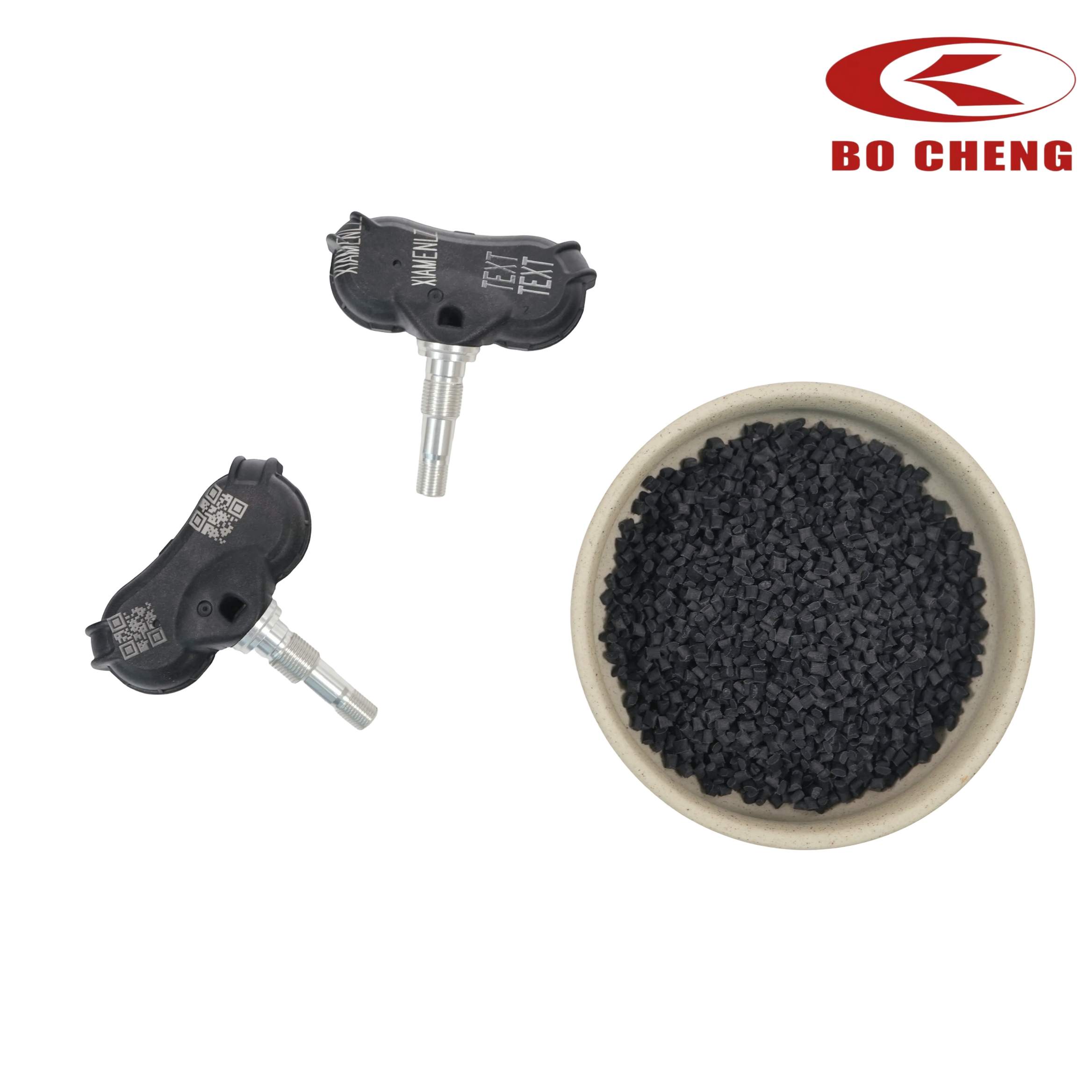
Selecting the optimal engineering plastic requires balancing structural performance against cost constraints and environmental conditions. PA66 CF30 excels in applications where weight reduction, structural stiffness, and dimensional accuracy take priority over low initial material cost.
In the field of unmanned aerial vehicles and commercial drones, PA66 CF30 provides an ideal material choice for rotor arms, frame connectors, and camera gimbal mounts. The material withstands high vibrational loads while minimizing structural mass, directly extending flight duration and battery efficiency. Similarly, modern robotics and industrial automation rely on PA66 CF30 for articulated joint linkages, robotic gripper arms, and high-speed reciprocating gears. The low inertia of lightweight carbon-reinforced parts allows servo motors to achieve faster response times and higher operational speeds with reduced energy consumption. High-end professional power tools also utilize PA66 CF30 for internal structural chassis and motor housings to reduce overall tool weight and user fatigue.
Conversely, applications requiring high impact resistance under extreme shock loading may require alternative material formulations. For example, severe impact environments like heavy construction safety helmets, low-temperature off-road vehicle bumpers, or high-impact athletic protection gear usually benefit more from specialized impact-modified PA66 grades. Furthermore, where electrical insulation is strictly mandatory, non-conductive glass-fiber reinforced PA66 represents the appropriate technical selection.
Achieving optimal mechanical performance from PA66 CF30 compounds depends heavily on proper processing techniques during injection molding. Polyamides are hygroscopic materials that absorb atmospheric moisture. Prior to processing, operators must dry PA66 CF30 granules in a dehumidifying desiccant dryer at 80 to 100 degrees Celsius for 4 to 6 hours. Maintaining moisture levels below 0.08% prevents hydrolytic degradation, which can otherwise sever polymer chains and compromise structural strength.
The melt processing temperature for PA66 CF30 typically ranges between 285 and 310 degrees Celsius. Maintaining precise barrel temperature profiles ensures proper resin melting without thermally degrading the polymer matrix. Furthermore, mold temperature control plays a vital role in surface quality and mechanical performance. Maintaining a mold temperature between 80 and 120 degrees Celsius promotes uniform polymer crystallization, improves surface appearance, and reduces internal residual stress within the molded part.
Engineers must also minimize fiber breakage during plasticization. High screw speeds or excessive back-pressure generate high shear stress, which can crush delicate short carbon fibers and reduce their effective length. Maintaining moderate screw speeds and low back-pressure preserves fiber aspect ratio, maximizing mechanical reinforcement. Because carbon fibers are abrasive, processing facilities should utilize wear-resistant bimetallic barrels and hardened steel molds to ensure long tool life.
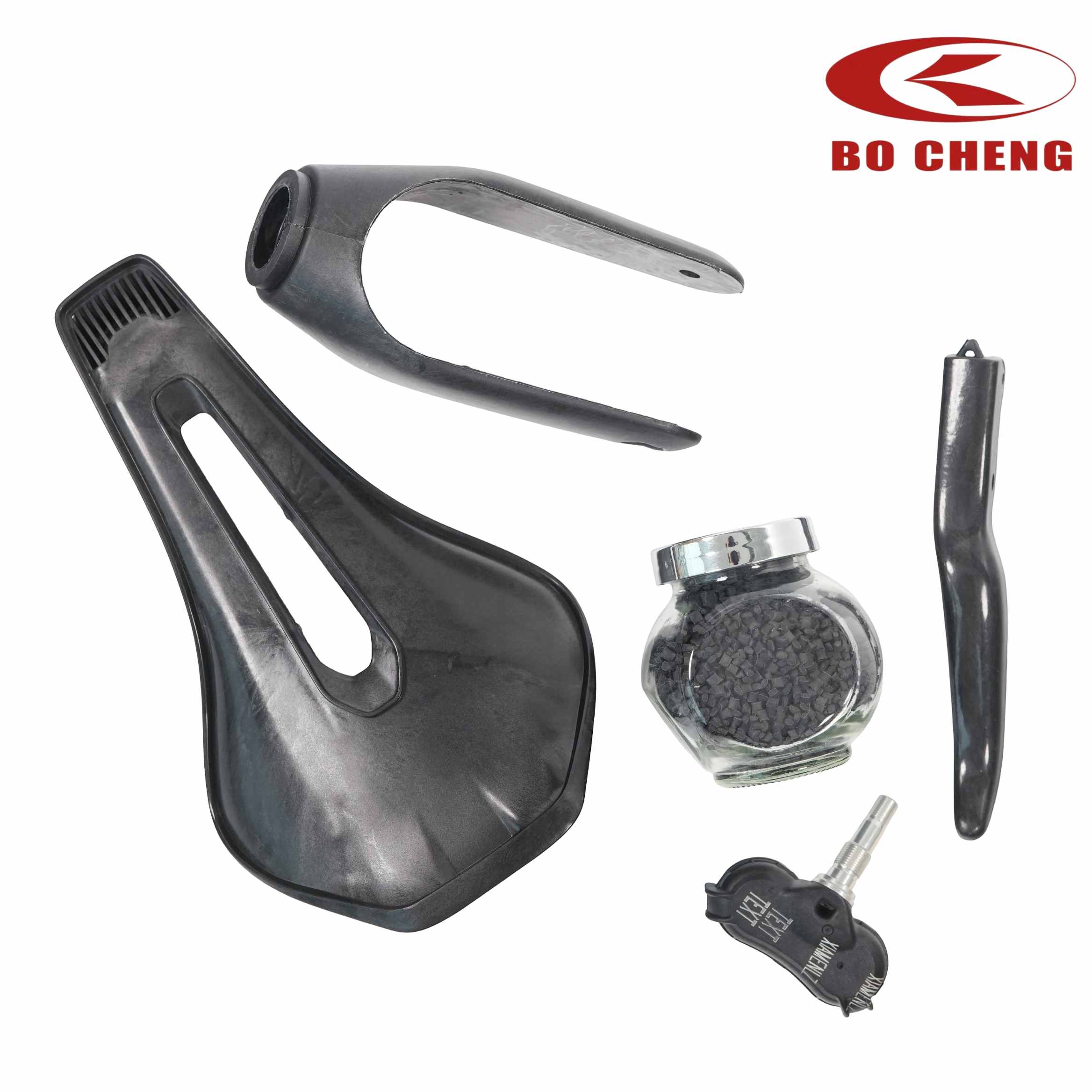
To meet diverse industrial requirements, specialized material manufacturers provide tailored compounding solutions that bridge standard resin supply with custom engineering demands. As a dedicated provider of advanced polyamide solutions, BOCHENG (Xiamen Bocheng Plastic Materials Co., Ltd) develops high-performance PA66 CF30 compound injection molding grades engineered specifically for structural light-weighting applications. Through precise fiber surface treatment and twin-screw compounding technologies, BOCHENG ensures optimal interfacial bonding between carbon fibers and the PA66 resin matrix.
Beyond standard PA66 CF30 formulations, Xiamen Bocheng Plastic Materials Co., Ltd offers customized modification options tailored to specific end-use environments. For applications demanding both extreme rigidity and enhanced toughness, BOCHENG integrates specialized elastomeric impact modifiers into the carbon fiber compound. For high-wear gear applications, the company formulates internal solid lubricants like PTFE or silicone additives to reduce friction coefficients and wear rates.
Consistent quality control and technical partnership remain central to industrial material supply. BOCHENG supports global OEMs and molding partners with comprehensive technical assistance, including mold shrinkage estimation, processing parameter optimization, and custom color matching. By combining advanced material performance with responsive engineering support, BOCHENG helps manufacturers successfully replace metal components and achieve lightweight efficiency.
For detailed product specifications, technical data sheets, and engineering inquiries, visit the official website at https://www.pa6-pa66.com/.