Analysis of Surface Defects of Injection-molded Nylon: Causes and Solutions of Silver Streaks, Gas Marks and Sink Marks
Dec 17, 2025
Surface defects remain a critical challenge in injection molding of nylon materials, as they directly affect aesthetic quality, dimensional stability, and end-user acceptance. Among these defects, silver streaks, flow marks caused by trapped gas, and sink marks are the most frequently observed. Although these phenomena may appear visually similar, their formation mechanisms and control strategies differ substantially and must be analyzed from the perspectives of material behavior, processing conditions, and mold design.
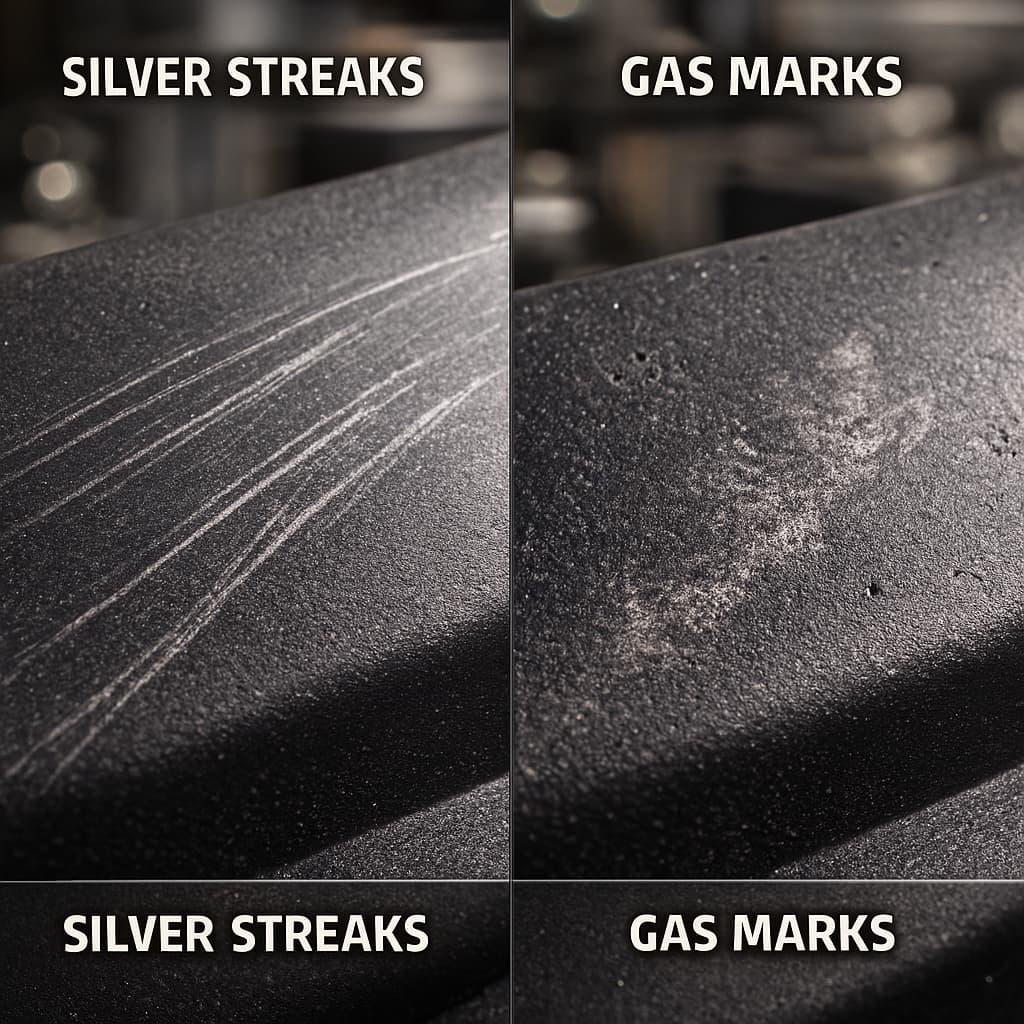
Silver streaks typically appear as elongated, silvery lines aligned with the melt flow direction. Their primary cause in nylon systems is the presence of volatile substances, especially moisture. Due to the hygroscopic nature of polyamides, absorbed water rapidly vaporizes under high processing temperatures, forming microbubbles that are stretched by shear forces during injection. These elongated bubbles solidify on the surface, resulting in visible streaks. Inadequate drying, excessive melt temperature, and high shear rates significantly increase the likelihood of this defect.
Gas-related flow marks differ from silver streaks in both appearance and origin. They are usually irregular or cloudy patterns formed when trapped air cannot be efficiently evacuated from the mold cavity. Poor venting, excessive injection speed, or low mold temperature can cause the melt front to seal venting paths prematurely, leading to unstable flow behavior. Optimizing vent design, adjusting injection profiles, and maintaining appropriate mold temperatures are essential to mitigate this issue.
Sink marks are primarily associated with the semi-crystalline nature of nylon materials. During cooling, crystallization-induced volumetric shrinkage occurs, particularly in thick sections or areas with insufficient packing pressure. If the gate freezes too early or packing time is inadequate, molten material cannot compensate for the volume reduction, resulting in localized depressions. Proper gate design, extended packing phases, and balanced wall thickness are key measures to control sink marks.
A comprehensive understanding of moisture sensitivity, crystallization behavior, and melt flow dynamics is essential for effectively controlling surface defects in nylon injection molding. Only through coordinated optimization of materials, processing parameters, and mold structures can consistent surface quality be achieved.
Read More