Why Flame-Retardant Nylon That Passes UL94 Still Fails in End-Use Products?Section2
Feb 04, 2026
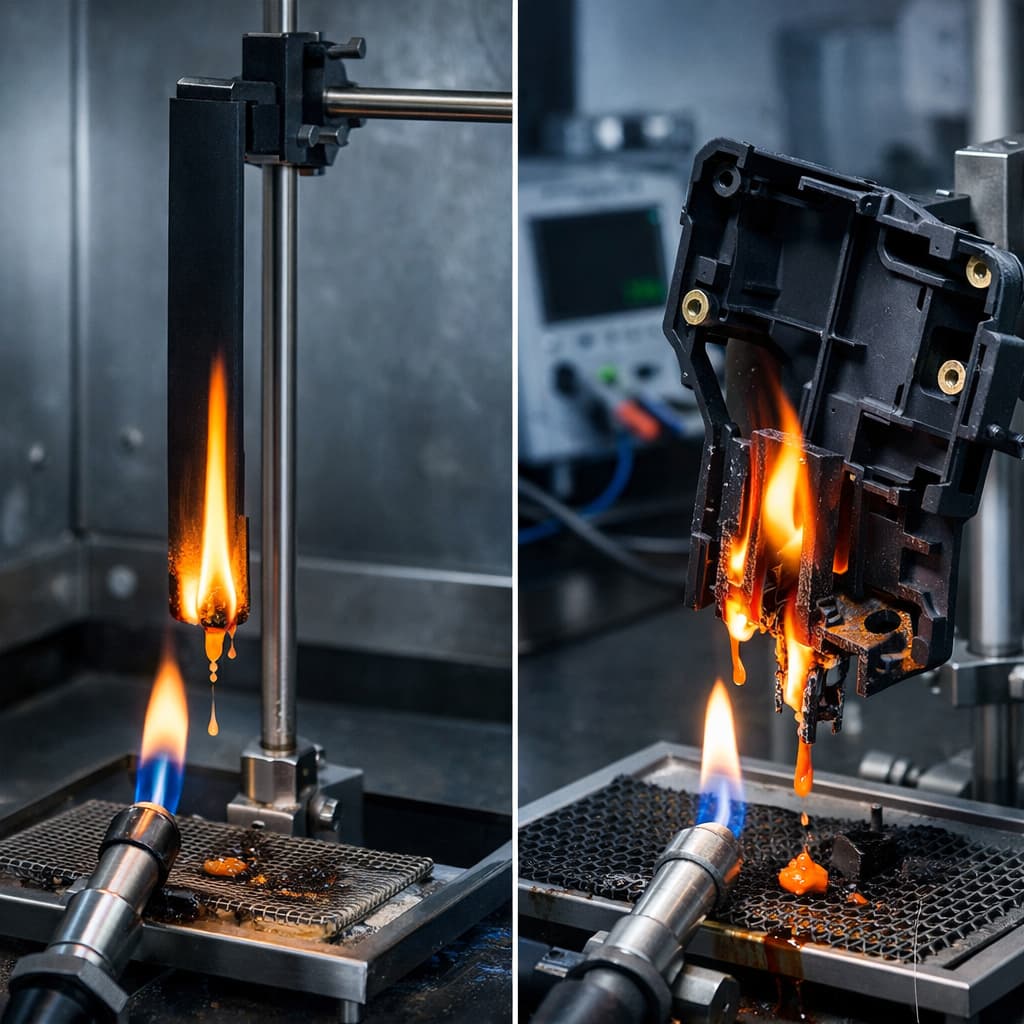
A significant number of field cases show that passing UL94 does not guarantee flame-retardant reliability at the system level. In multi-material assemblies, flame-retardant nylon components are often placed adjacent to non-flame-retardant plastics such as TPE or PBT. Volatile combustible gases released by neighboring materials during ignition can alter the local flame environment, reducing the self-extinguishing capability of the nylon component. This type of system-level failure cannot be captured by single-material UL94 testing but represents a high-frequency risk in end-use products.
Another common source of failure is long-term aging and service environment. UL94 tests are typically performed on new materials and freshly molded parts. In real service, components are exposed to prolonged thermal aging, electrical stress, and humid conditions. Certain additive-type flame retardants may migrate or hydrolyze under high temperature and humidity, leading to reduced surface flame-retardant concentration. In practice, products that initially pass testing may fail after 85℃/85%RH aging, exhibiting dripping or sustained burning.
From a validation standpoint, more engineering teams are supplementing UL94 with tests such as GWIT, GWFI, and glow-wire testing on finished components. At the material selection stage, specifying the actual minimum wall thickness and requesting flame-retardant data at that thickness, rather than relying on the “best-case” thickness in certification reports, has proven effective in reducing end-use failure risk.
Read More