What Are You Looking For?

2026 Latest Progress of Modified PA12 Powder Technology: From Lab to Mass Production 02
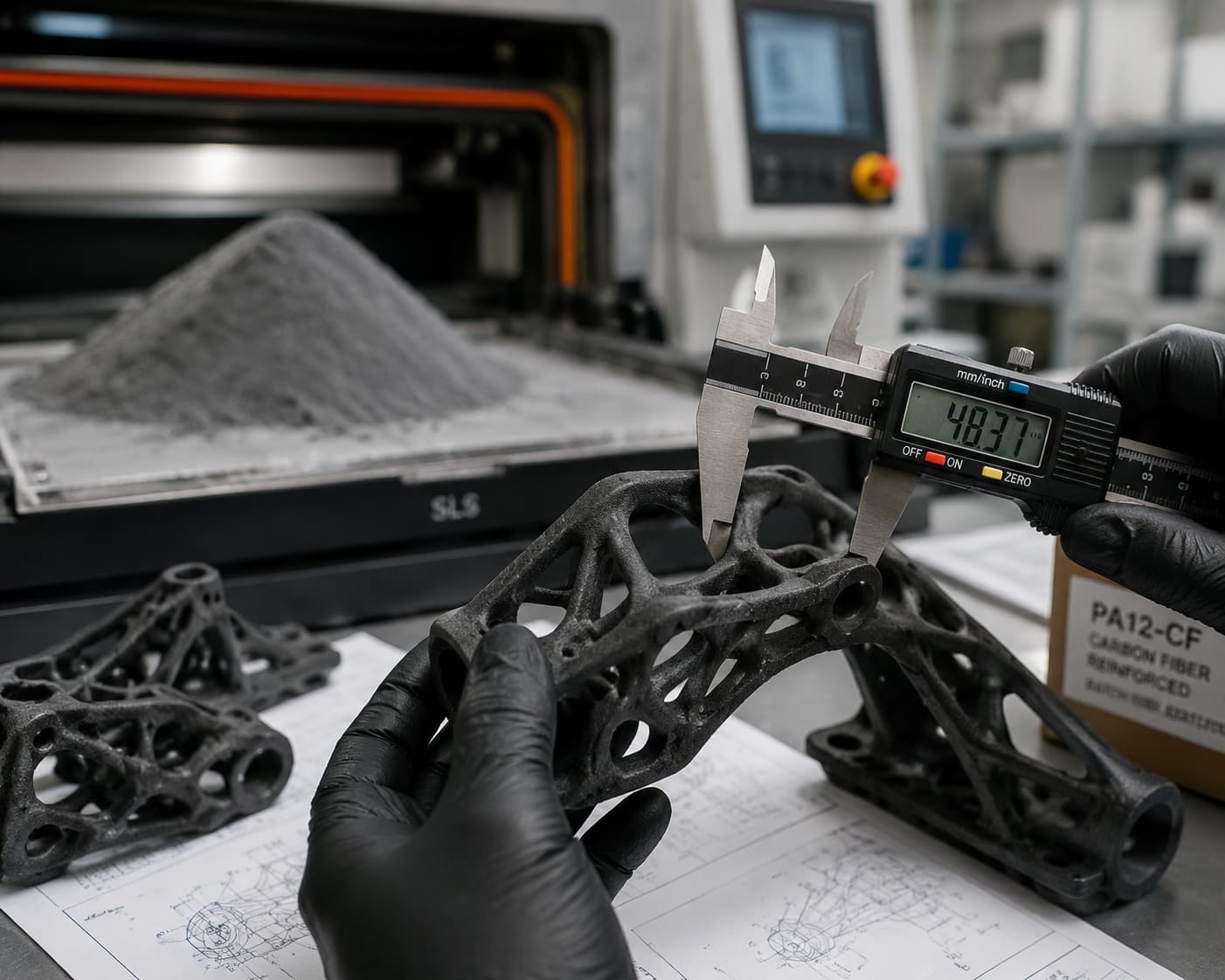
In mass manufacturing, simple dry blending inevitably leads to filler segregation during fluidization and recoating, causing anisotropic defects in the final components. Modern industrial modification processes therefore utilize in-situ coating or controlled thermal adherence to secure modifiers onto the 40–60 μm PA12 grains, guaranteeing homogeneous melt-pool dynamics and isotropic material properties during laser interaction.
The assessment of an industrial-ready modified PA12 powder relies heavily on verifiable empirical parameters, specifically the powder refresh rate and the heat deflection temperature (HDT) of the sintered components. Recent production data indicates that PA12 formulations modified with optimized nano-silica and proprietary anti-oxidant systems can function reliably at a refresh ratio of 20% fresh to 80% recycled powder, maintaining a tensile strength deviation of less than 5% across multiple generations. Concurrently, for structural applications requiring structural rigidity, carbon-fiber-reinforced PA12 composite powders demonstrate a significant increase in HDT under a 1.82 MPa load, rising from approximately 80°C to over 130°C. These quantifiable performance baselines offer procurement and technical teams the exact operational reliability required to replace machined aluminum or zinc die-casts with additively manufactured engineering plastics.