What Are You Looking For?

What Makes a Reliable Custom EOS PA12 Powder Alternative Supplier in Industrial Additive Manufacturing?
Selective Laser Sintering (SLS) technology has fully transitioned from rapid prototyping into mainstream industrial manufacturing. As production volumes expand across automotive, consumer electronics, aerospace, and medical device sectors, service providers face pressing economic and logistical demands. In large-scale industrial build environments, raw material expenditure accounts for up to forty percent of total component production costs. Original equipment manufacturer (OEM) polyamide 12 (PA12) powders often impose substantial operational costs and rigid delivery schedules. Consequently, enterprise operators actively evaluate alternative material options to protect margin performance and ensure supply continuity. Identifying a Reliable Custom EOS PA12 Powder Alternative Supplier has therefore become a strategic priority for additive manufacturing bureaus worldwide.
This material diversification movement reflects broader trends in global supply chain management. Production facilities require raw material sources that deliver uncompromised mechanical properties while offering scalable pricing models. Furthermore, global geopolitical shifts and logistics bottlenecks highlight the risk of relying on single-source material streams. By qualifying specialized third-party polymer compounders, manufacturing operations gain greater cost flexibility and localized support without sacrificing equipment uptime. Industrial users increasingly demand stable, high-purity polymer formulations capable of matching OEM performance metrics across demanding multi-day print runs. Furthermore, expanding operational capacity requires seamless material integration across existing machinery fleets. Manufacturing plants must maintain continuous throughput without requiring expensive hardware modifications or prolonged calibration cycles. As a result, material engineering teams carefully analyze physical powder dynamics to guarantee seamless drop-in performance.
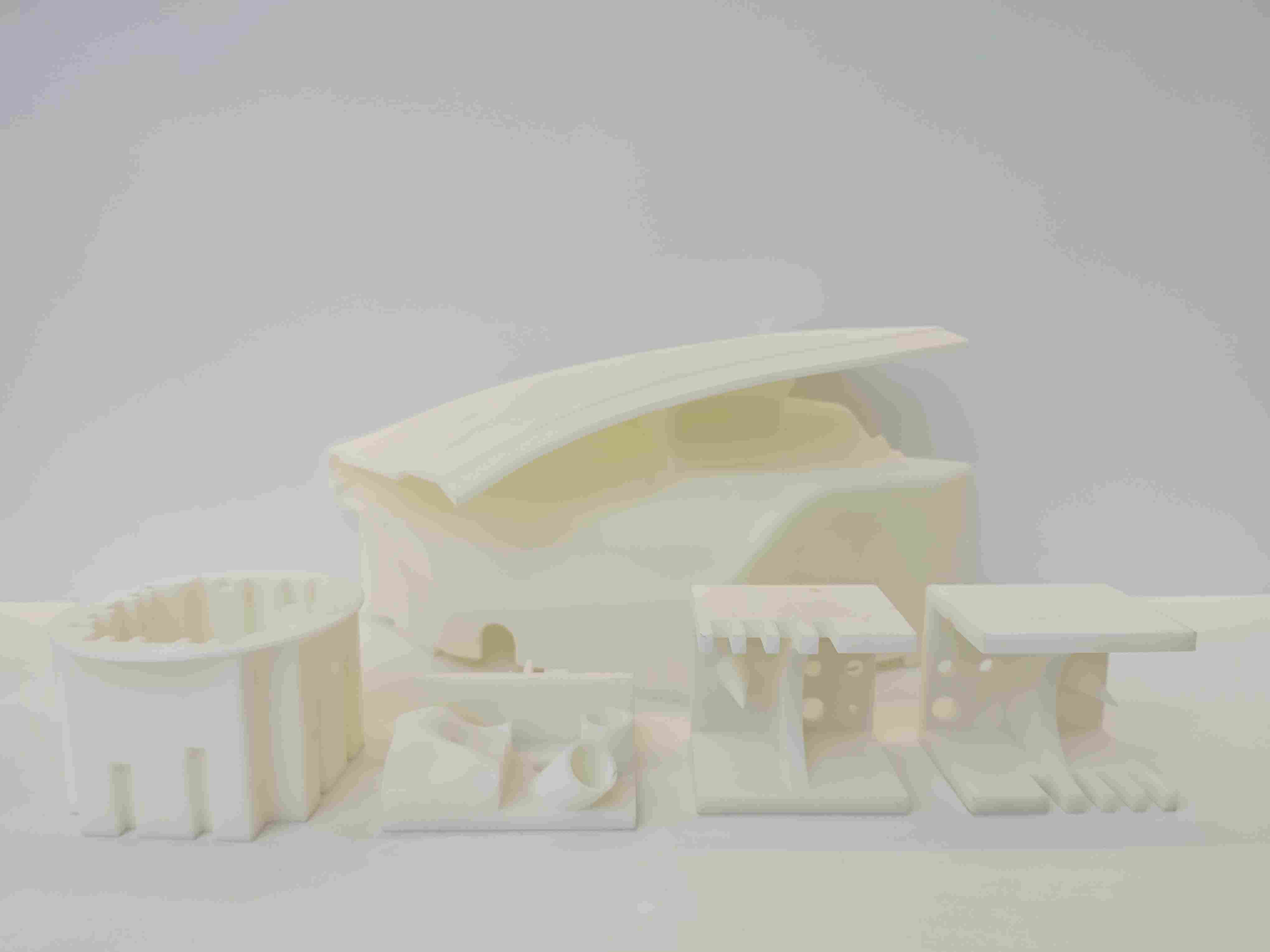
How do technical managers evaluate whether a third-party powder matches original EOS platform standards? The answer lies in precise physical particle characteristics, chemical purity, and thermal behavior during laser sintering.
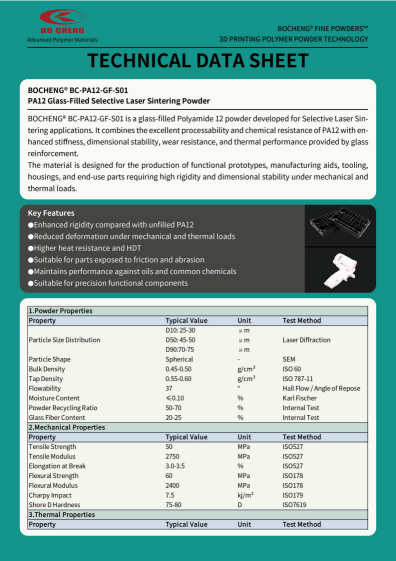
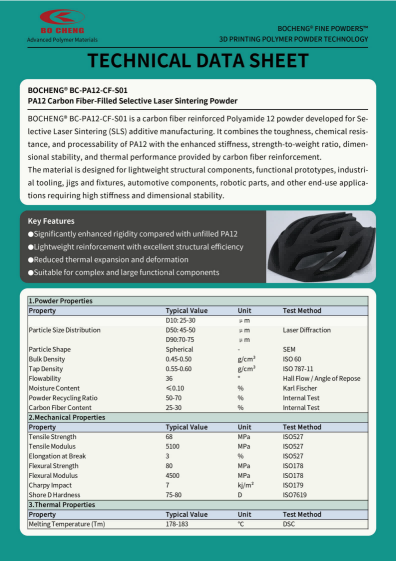
First, particle size distribution (PSD) governs powder recoating behavior and final surface roughness. High-performance powders maintain tight dimensional boundaries. For optimal packing density and smooth layer deposition, D10 values typically range between 25 and 30 microns. D50 median particle sizes sit between 45 and 50 microns, while D90 values remain controlled between 70 and 75 microns. When fine particles below 20 microns accumulate, inter-particle van der Waals forces trigger powder agglomeration during recoating. Conversely, oversized particles above 80 microns cause surface streaking and decrease sintered part density. Maintaining a uniform spherical morphology further reduces internal friction, yielding an angle of repose around 32 degrees for seamless recoater blade passes.
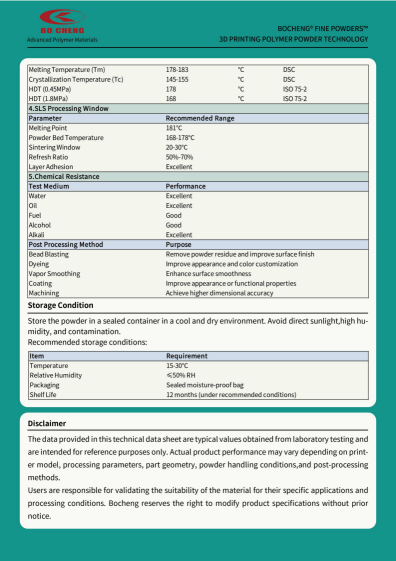
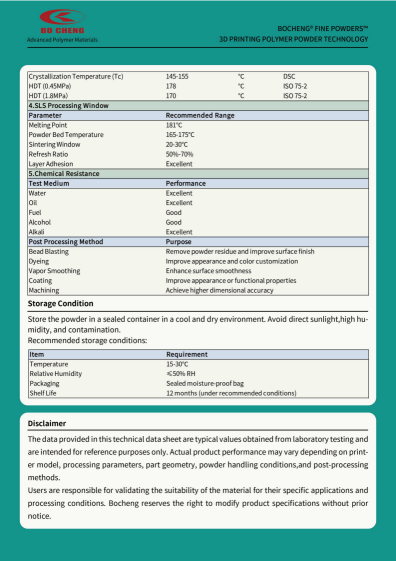
Second, thermal stability defines the sintering window during printer operation. Polyamide 12 requires a broad thermal differential between its melting point and crystallization temperature. A standard formulation displays a melting point between 178 and 183 degrees Celsius and a crystallization point between 145 and 155 degrees Celsius. This broad processing window, spanning 20 to 30 degrees Celsius, prevents premature crystallization when bed temperatures operate between 165 and 175 degrees Celsius. Stable thermal behavior prevents warping, curling, and layer delamination during long production builds.
Finally, recyclability determines long-term cost viability in commercial 3D printing applications. Reliable alternative powders sustain consistent molecular weight and melt flow rate across multiple build cycles. Service bureaus regularly operate with refresh ratios between 30 percent and 70 percent new powder. In addition, moisture content must remain strictly below 0.10 percent by weight to prevent bubble formation, surface degradation, or inconsistent laser absorption. Careful monitoring of thermal degradation over time ensures that recycled fractions preserve mechanical integrity in finished components.
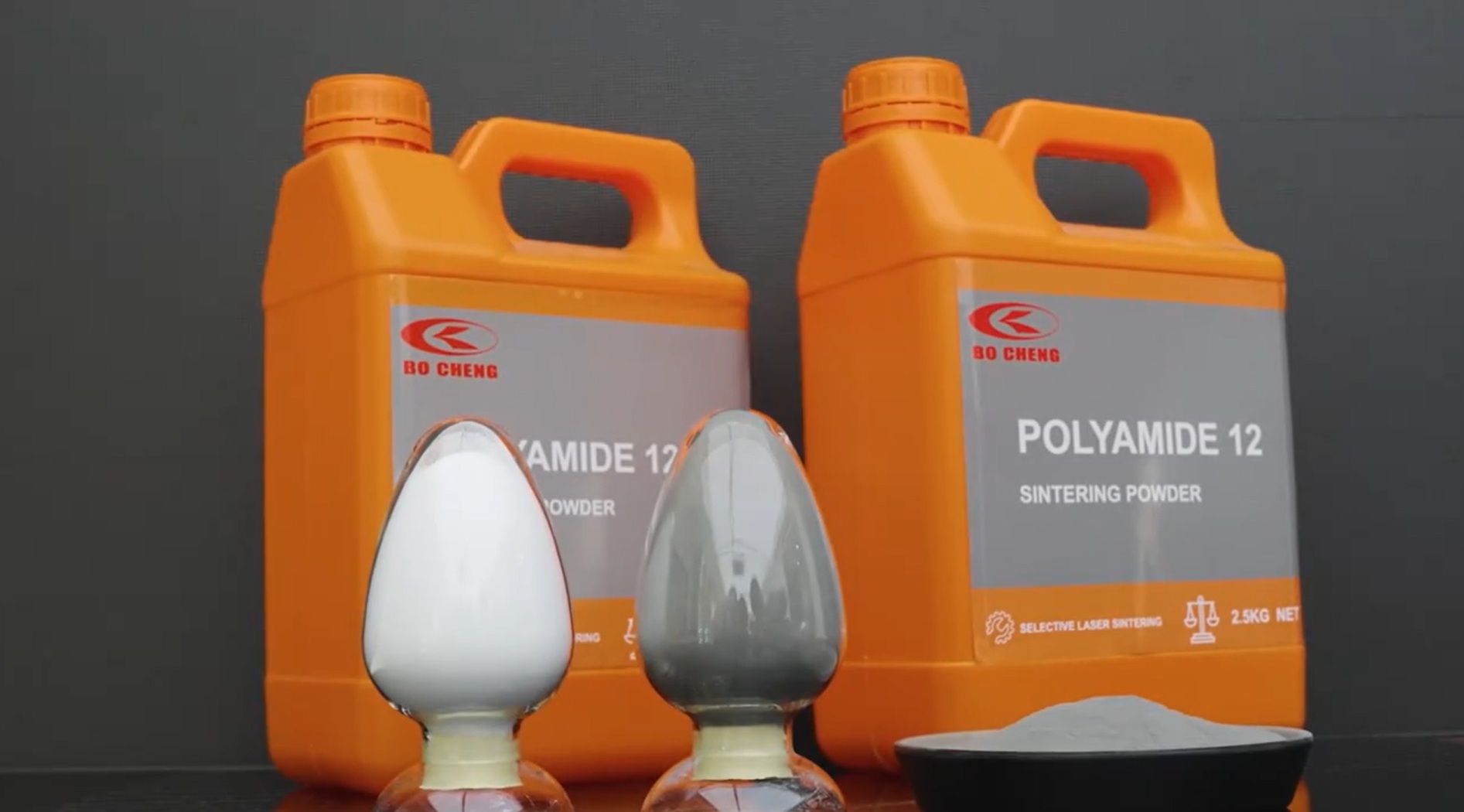
Why does deep polymer compounding experience matter when selecting an SLS material manufacturer? Grinding raw polymer pellets into fine powder represents only one stage of the production cycle. True material reliability requires comprehensive control over polymer chemistry, melt stabilization, and micro-particle morphology.
Companies with an extensive background in thermoplastic engineering bring distinct advantages to additive manufacturing. For instance, BOCHENG (Xiamen Bocheng Plastic Materials Co., Ltd.) leverages over 17 years of experience in specialized polymer modification and compounding. Rather than acquiring generic secondary powders, technical teams engineer base formulations using twin-screw compounding systems. This melt-compounding stage evenly disperses heat stabilizers, anti-oxidants, and flow aids at the molecular level. This fundamental engineering approach ensures that the base resin maintains structural integrity under repeated laser exposure.
To preserve polymer chain integrity during size reduction, specialized processors utilize cryogenic freezing systems. Processing material at temperatures down to minus 100 degrees Celsius prevents thermal degradation and maintains uniform spherical particle shapes. Advanced air classification systems then remove satellite fines and oversized particles, resulting in a predictable particle size distribution curve.
Quality control protocols further reinforce batch-to-batch predictability. Certified under ISO 9001 and IATF 16949 quality management frameworks, BOCHENG enforces a five-stage quality control system. Quality assurance teams inspect raw polymer feeds, modified pellets, raw milled powder, thermal DSC profiles, and final Certificate of Analysis (COA) metrics. This systematic oversight ensures that every production batch behaves predictably inside industrial EOS laser sintering systems.
What specific material attributes and commercial options support specialized end-use applications? Industrial applications often demand properties beyond standard white prototype parts.
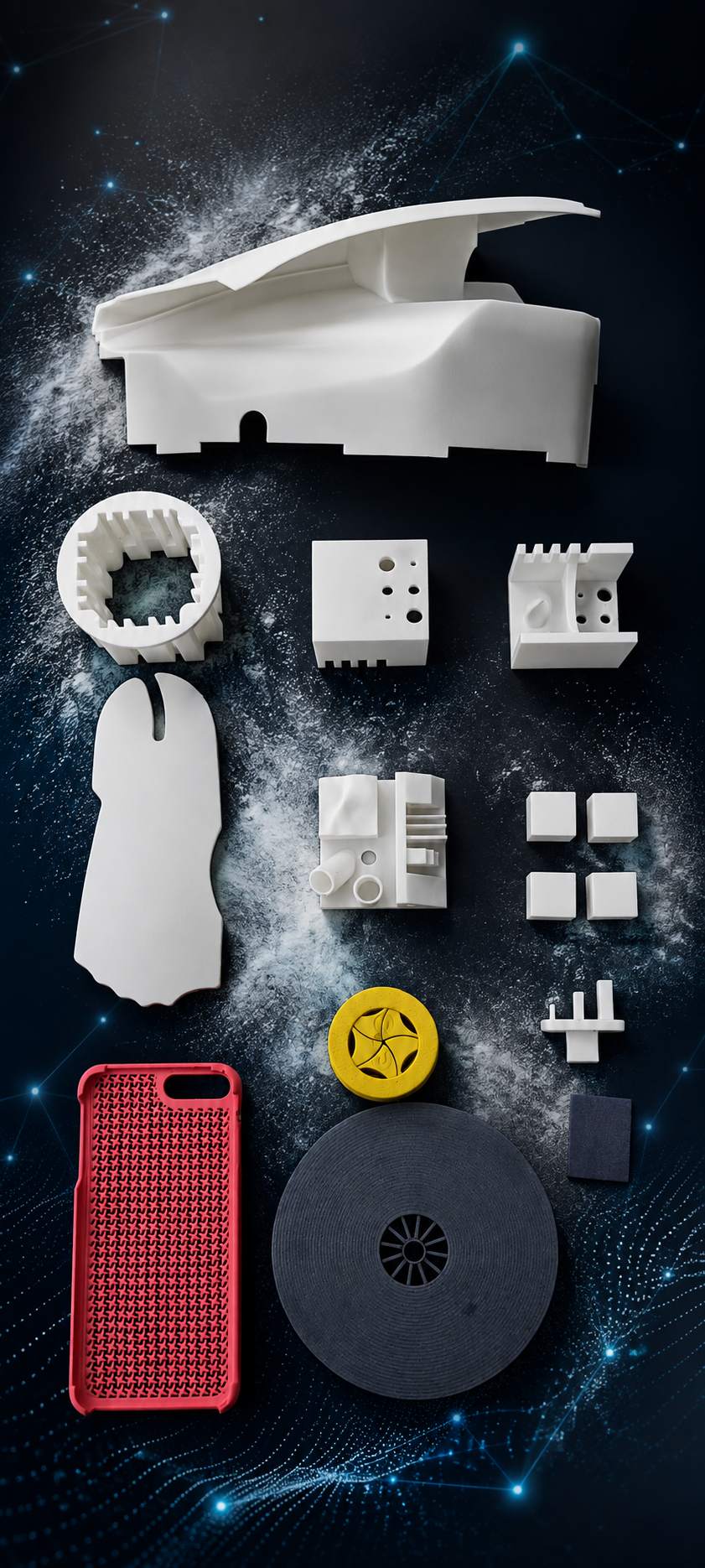
The flagship formulation, designated as BC-PA12-S01, provides high mechanical toughness, chemical resistance, and thermal stability. Sintered components achieve a tensile strength of approximately 46 MPa, along with exceptional resistance to water, oils, alkalis, and fuels. These physical properties render the material suitable for functional automotive ducts, electronic enclosures, and durable industrial tooling. Long-term environmental resistance ensures that finished components maintain structural stability under demanding field conditions.
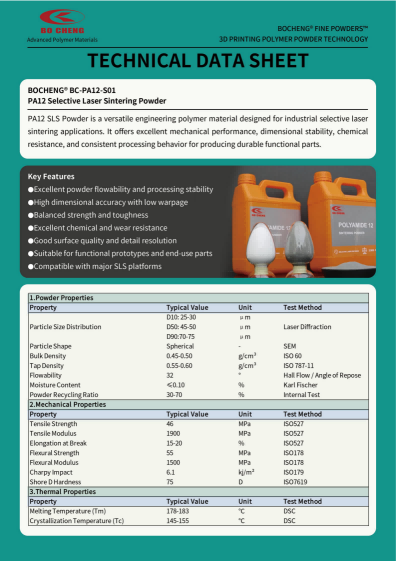
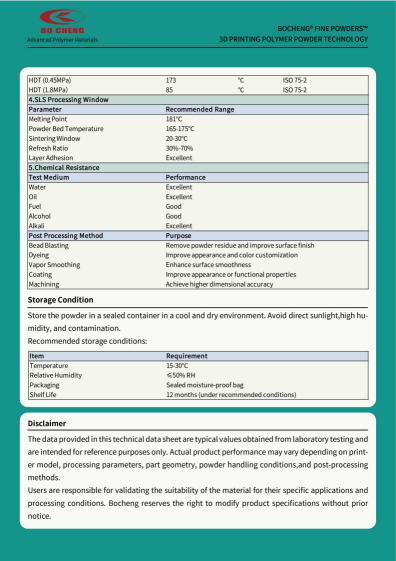
Beyond standard grade specifications, BOCHENG provides extensive customization capabilities. Customers can request specific particle size distributions, tailored mesh ranges, and custom color options including deep black and neutral gray. For demanding structural applications, the product matrix includes glass-fiber-reinforced variants like BC-PA12-GF-S01, carbon-fiber-filled options like BC-PA12-CF-S01, as well as PA11 and flexible TPU 90A powders.
Commercial flexibility forms another pillar of industrial supply support. Xiamen Bocheng Plastic Materials Co., Ltd. accommodates low minimum order quantities starting at 25 kilograms in moisture-proof bags or heavy-duty drums. Direct access to international shipping routes via Xiamen Port enables prompt global delivery, allowing service bureaus to maintain lean material inventories while responding rapidly to client project demands. Flexible purchasing structures allow prototyping houses and large contract manufacturers to scale procurement seamlessly in response to fluctuating build volumes.