What Are You Looking For?

From prototype validation to mass production, performance shifts in polyamide are often misunderstood as material inconsistency, while in reality they stem from changes in processing conditions. In controlled lab environments, injection-molded samples are produced under stable drying, low shear, and optimized mold temperatures. However, once scaling to production, variations in moisture content, cycle time, and shear history significantly alter material behavior.
Polyamide is highly sensitive to moisture. A variation from 0.08% to 0.2% can lead to measurable drops in impact strength and increased surface defects. In mass production, material handling and ambient humidity introduce fluctuations before the material even enters the molding machine.
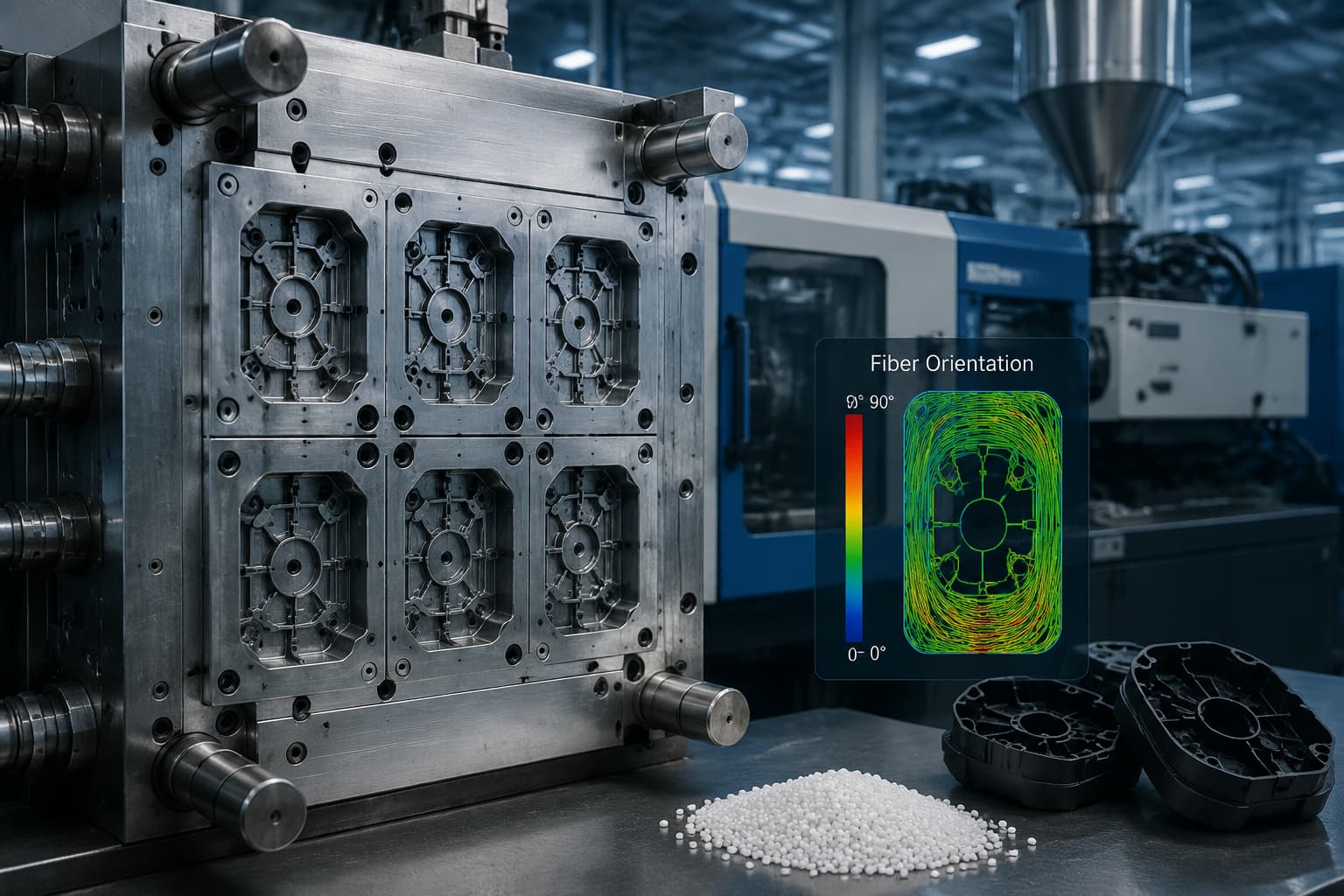
Processing window shifts are another key factor. Higher injection speeds and shorter cycles increase shear rates, enhancing molecular orientation and anisotropy. This is particularly evident in glass fiber reinforced PA66, where fiber alignment affects warpage and dimensional stability.
Tooling differences further complicate scaling. Multi-cavity molds introduce flow imbalance and temperature gradients, affecting crystallization behavior and shrinkage consistency. These issues are often misattributed to material variation rather than process deviation.