What Are You Looking For?

High-flow nylon materials have gained prominence as industries move toward lightweight structures and increasingly complex geometries. Automotive components, electrical devices, 3D-printed parts, and compact consumer products all require materials capable of filling thin-wall sections, micro-features, and extended flow paths. Conventional nylon grades, despite their balanced mechanical, thermal, and chemical resistance properties, often struggle with limited flow behavior during injection molding. Modern high-flow nylon grades, enabled by advances in molecular weight control, lubrication packages, and optimized reinforcement systems, form a unique class of materials that improves molding performance, aesthetic quality, and structural integrity.
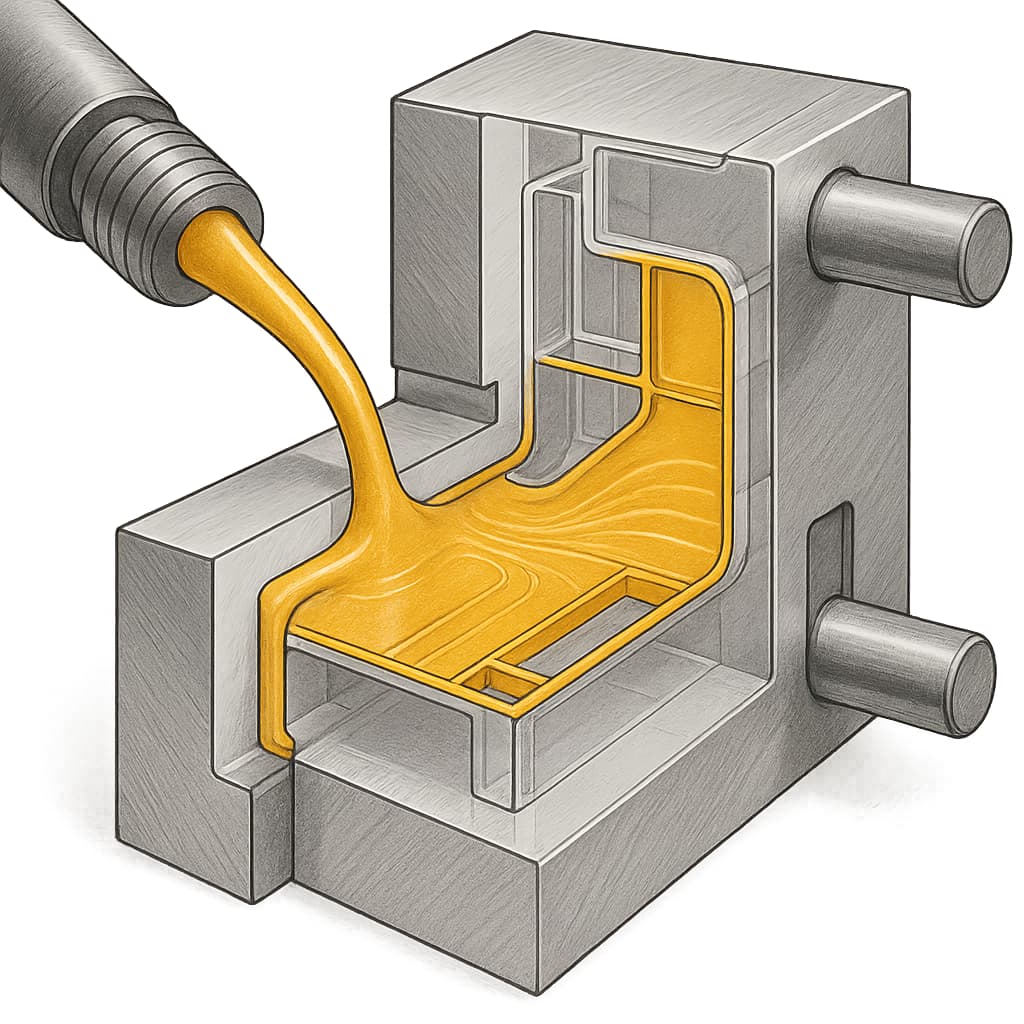
One of the strongest advantages of high-flow nylon is its ability to fill thin-wall regions with significantly lower injection pressure. For wall thicknesses below 0.6 mm, standard PA6 or PA66 grades tend to generate short shots, uneven filling, and visible weld lines. High-flow grades exhibit less sensitivity to shear, allowing the melt to maintain low viscosity even at high shear rates. As a result, thin-wall molds can be fully packed without excessive pressure or clamp force, reducing energy consumption and extending equipment life. Their enhanced front-flow stability ensures more complete filling in micro-ribs and elongated features, improving dimensional fidelity.
High-flow nylon also improves the thermal balance of thin-wall molding. Because the melt fills the cavity more rapidly, solidification occurs more uniformly, minimizing internal stress and cold spots in regions with variable thickness. This contributes directly to improved fatigue resistance and long-term durability. Surface aesthetics benefit as well; reduced melt viscosity allows the polymer to replicate fine mold textures with superior clarity. For reinforced grades, glass or carbon fibers disperse more evenly, lowering the visibility of flow marks and fiber streaks.
From a tooling perspective, high-flow nylon gives engineers greater design freedom. Fewer gate points are needed to achieve complete filling, reducing weld-line formation and enhancing overall appearance. The material’s reduced sensitivity to mold temperature allows stable molding even under moderate thermal conditions, shortening cycle times. Lower injection pressure also reduces mechanical stress on molds, extending their usable life.
Industrial demand for high-flow nylons continues to grow. Electric vehicles rely on thin-wall connectors, compact motor housings, and complex structural components that benefit from extended flow capability. In 3D printing, high-flow nylon formulations help stabilize melt behavior in powder bed fusion, improving density and dimensional accuracy. Consumer electronics and smart devices increasingly utilize thin, lightweight enclosures and precision snap-fits, applications where high-flow nylon delivers enhanced durability and structural reliability.
Future research will focus on balancing flow performance with mechanical strength and thermal stability. Advances in nano-reinforcement, interfacial chemistry, and polymer chain architecture will enable new high-flow compounds suitable for extreme environments and more integrated structural designs. As thin-wall structures continue to dominate product development, high-flow nylon will remain a key material driving innovation across multiple industries.