Breakthroughs in the modification of nylon materials for 3D printing
Aug 06, 2025
As one of the core technologies in additive manufacturing, 3D printing has experienced rapid development in the past decade. Its applications continue to expand across aerospace, healthcare, automotive, and consumer electronics sectors. High-performance materials have emerged as the key driver behind these advancements. Among them, nylon—especially PA6 and PA12—has become one of the most representative engineering plastics in 3D printing due to its mechanical strength, toughness, thermal resistance, and chemical stability. However, traditional nylon still suffers from high moisture absorption, weak interlayer bonding, and poor dimensional stability, which limit its use in high-precision or load-bearing parts. Therefore, modification of nylon materials has become a major focus in the industry.
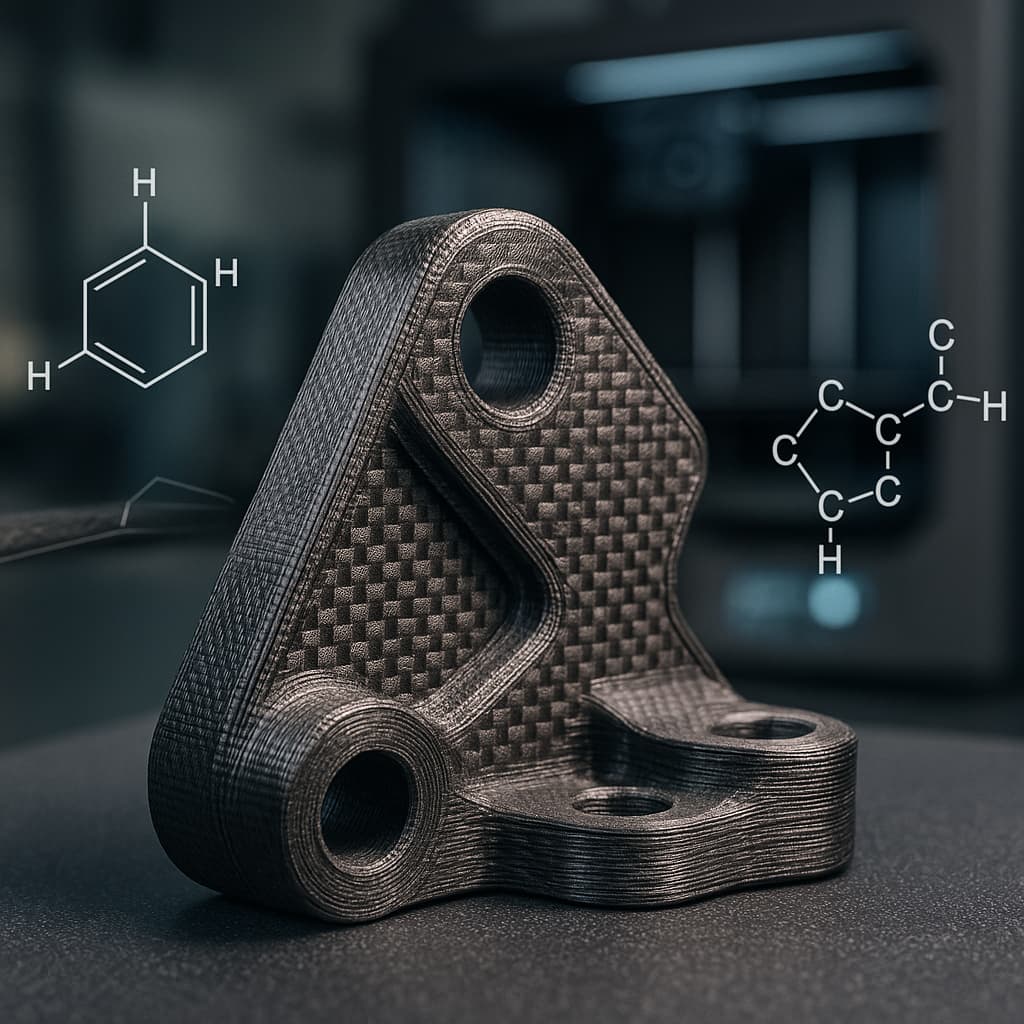
Common modification strategies include glass fiber reinforcement, carbon fiber filling, copolymerization, polymer blending, and nano-filler techniques. Incorporating glass or carbon fibers significantly improves the material’s modulus and strength, enabling the production of large or functional parts with better structural integrity. For example, 30% glass fiber-reinforced PA6 can reach injection molding–level mechanical strength in 3D printing while maintaining adequate flexibility, making it suitable for jigs, enclosures, and structural frames.
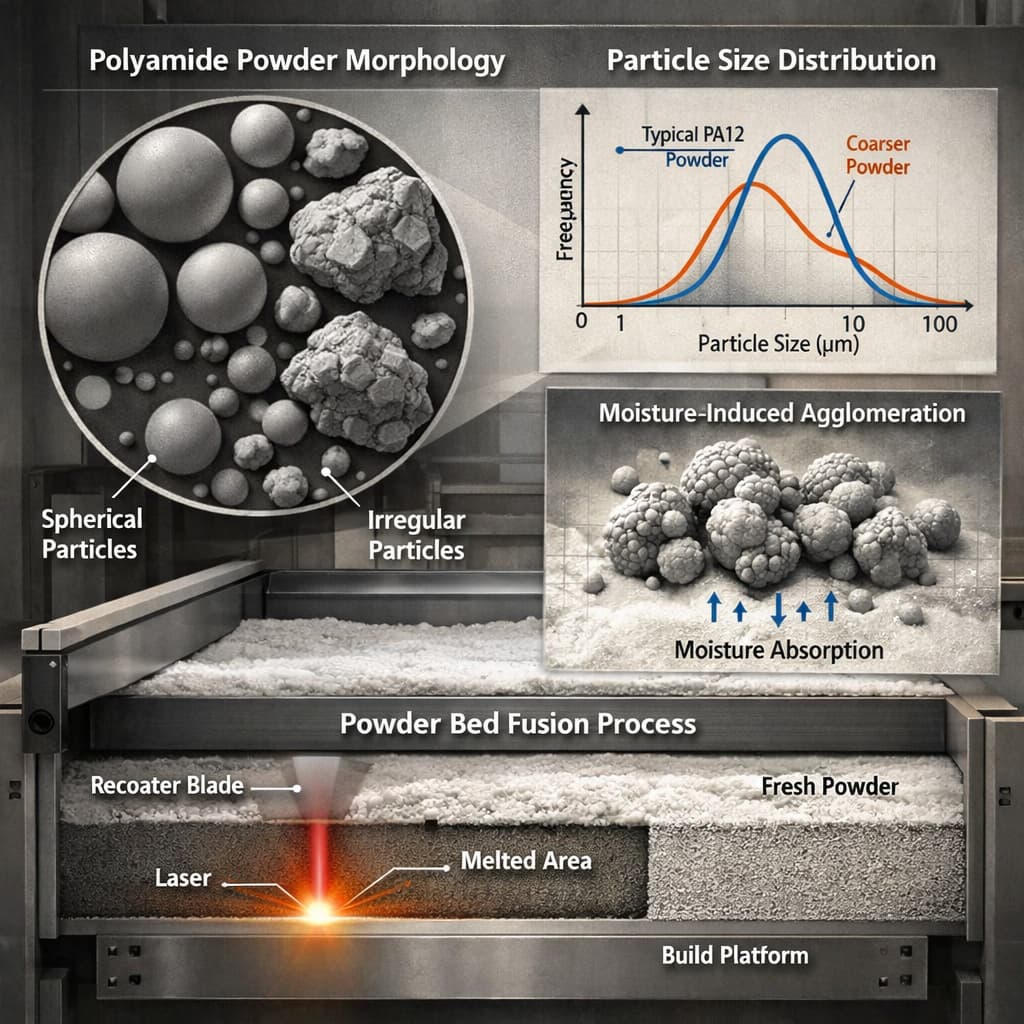
Another breakthrough lies in developing low-hygroscopic nylon. Due to the polar amide groups, conventional nylons easily absorb moisture from the air, resulting in dimensional changes and mechanical degradation. Through structural design, such as replacing hydrophilic monomers or introducing cross-linking agents, the moisture uptake can be substantially reduced. Commercial grades like PA12-L are now widely used in industrial 3D printing systems for high-precision and long-term stability applications.
Improving interlayer adhesion is also critical in 3D printing, where layer-by-layer deposition leads to potential delamination. Developers introduce polar functional groups or thermally activated adhesives to enhance interlayer fusion without compromising mechanical properties. By adding reactive copolymers or functional elastomers, the molecular chains achieve better diffusion during melting, thereby enhancing overall structural consistency and impact resistance.
In addition to mechanical improvements, multifunctional properties such as conductivity, flame retardancy, and anti-static performance are also being explored. Incorporating carbon nanotubes, graphene, or phosphorus-based flame retardants allows modified nylon to meet the needs of electronic housings, aerospace components, and hazardous environments. These functional additives require precise dispersion and advanced blending techniques to ensure print quality.
The future of modified nylon in 3D printing lies in its integration with smart manufacturing systems. By combining AI-controlled printing parameters with material design, a holistic optimization of the material-process-equipment triangle can be realized. Simultaneously, sustainability is becoming a priority, with bio-based nylons and recyclable reinforcements being developed to reduce environmental impact and support a low-carbon manufacturing ecosystem.
Breakthroughs in nylon modification not only accelerate 3D printing’s adoption in advanced industries but also reshape materials science paradigms. As multifunctional, intelligent, and sustainable development trends continue to rise, modified nylon is set to play an increasingly vital role in the additive manufacturing value chain.
Read More