How to Reduce the Total Cost of Nylon Materials Without Compromising Safety?Section1
Mar 18, 2026
Reducing the total cost of nylon materials without compromising safety is a persistent challenge in many industrial projects. Whether in automotive components, home appliance structures, or industrial machinery parts, engineering teams in mass production stages often face pressure from procurement departments to lower material costs while maintaining performance. However, in practice, overly straightforward cost-reduction approaches—such as directly lowering glass fiber content or switching to lower-grade raw materials—often introduce long-term risks into the product lifecycle. Effective cost optimization therefore requires a systematic approach that integrates engineering design, material understanding, and supply chain management.
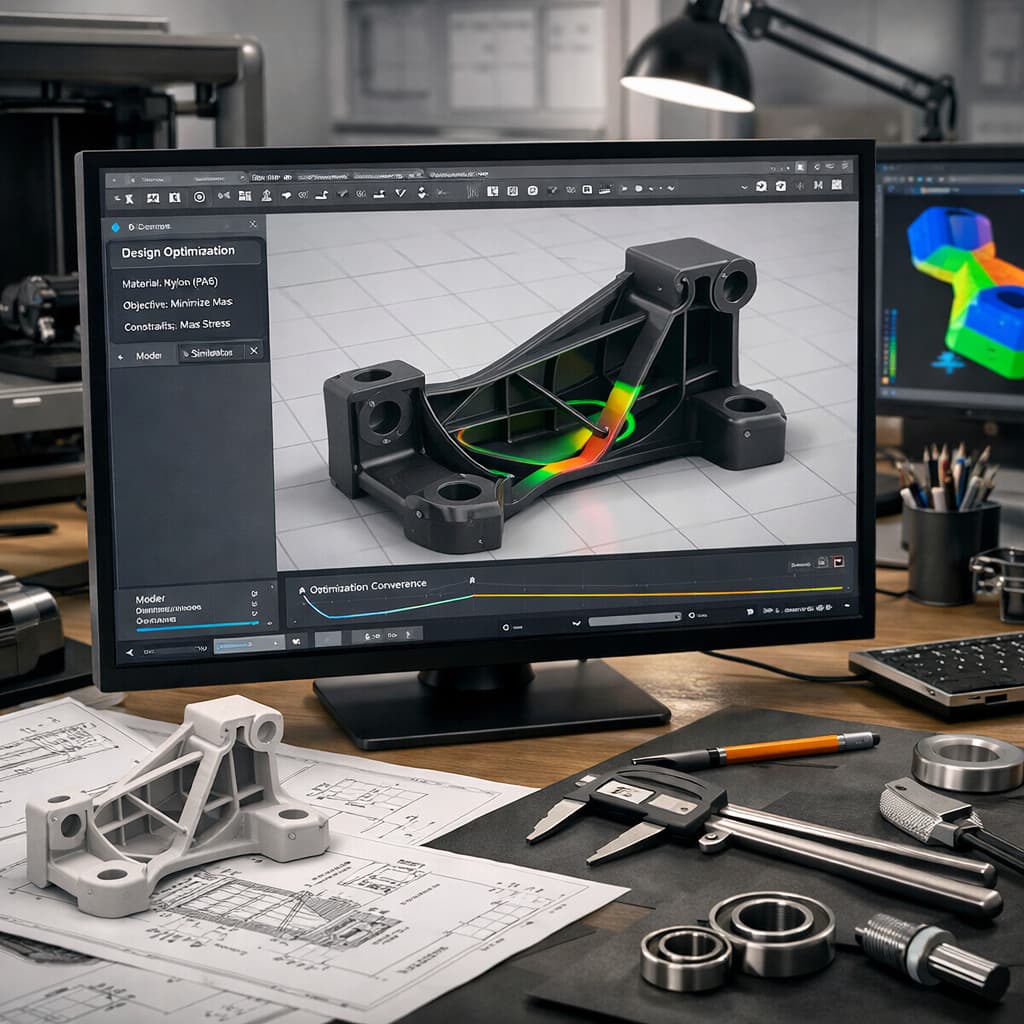
In real engineering scenarios, material cost is often not determined solely by unit price, but by how the material is used. For instance, in injection-molded structural components, designers may increase wall thickness to ensure stiffness. While this approach quickly improves strength, it also increases material consumption and extends molding cycle time. In contrast, optimizing stiffness through well-designed rib structures during the design phase can reduce material usage without changing the material grade. For high-volume production parts, such design optimization often delivers more significant cost savings than material price adjustments.
A deep understanding of nylon material properties is also fundamental to cost reduction. Nylon exhibits hygroscopic behavior: moisture absorption increases toughness while slightly reducing stiffness. If engineering teams rely solely on dry-state data for design, it often results in over-engineering. In reality, components operating under stable humidity conditions may have mechanical properties that differ significantly from dry-state values. Designing based on data that better reflects actual service conditions can eliminate unnecessary safety margins and reduce material usage.
Cost optimization of glass fiber–reinforced nylon also involves formulation adjustments. While increasing glass fiber content improves strength, it also significantly raises material cost. In non-critical load applications, combining mineral fillers with glass fiber can maintain sufficient stiffness while reducing overall formulation cost. The key lies in understanding the functional roles of different fillers: mineral fillers enhance dimensional stability, while glass fiber primarily contributes to structural strength.
Read More