Advanced Layout Directions for Nylon Modified Formulas Under the Compliance Trend of New Energy Vehicle Materials 1
Apr 08, 2026
Over the past decade, the electric vehicle industry has undergone a rapid transition from policy-driven development to market-driven expansion. During this transition, material systems often evolve more slowly than vehicle platform architectures. For engineering plastics suppliers, the challenge is no longer limited to achieving a specific mechanical property or flame-retardant rating. Instead, the real difficulty lies in maintaining stable engineering performance while complying with a rapidly evolving regulatory landscape.
In recent years, global material compliance frameworks have become increasingly strict. Regulations such as REACH, RoHS and ELV have already established fundamental environmental requirements for materials used in automotive components. At the same time, new regulatory discussions regarding PFAS restrictions and carbon footprint disclosure are gradually influencing material selection policies adopted by automotive OEMs. These changes are particularly relevant for polyamide compounds, which are widely used in electrical and structural components within electric vehicles.
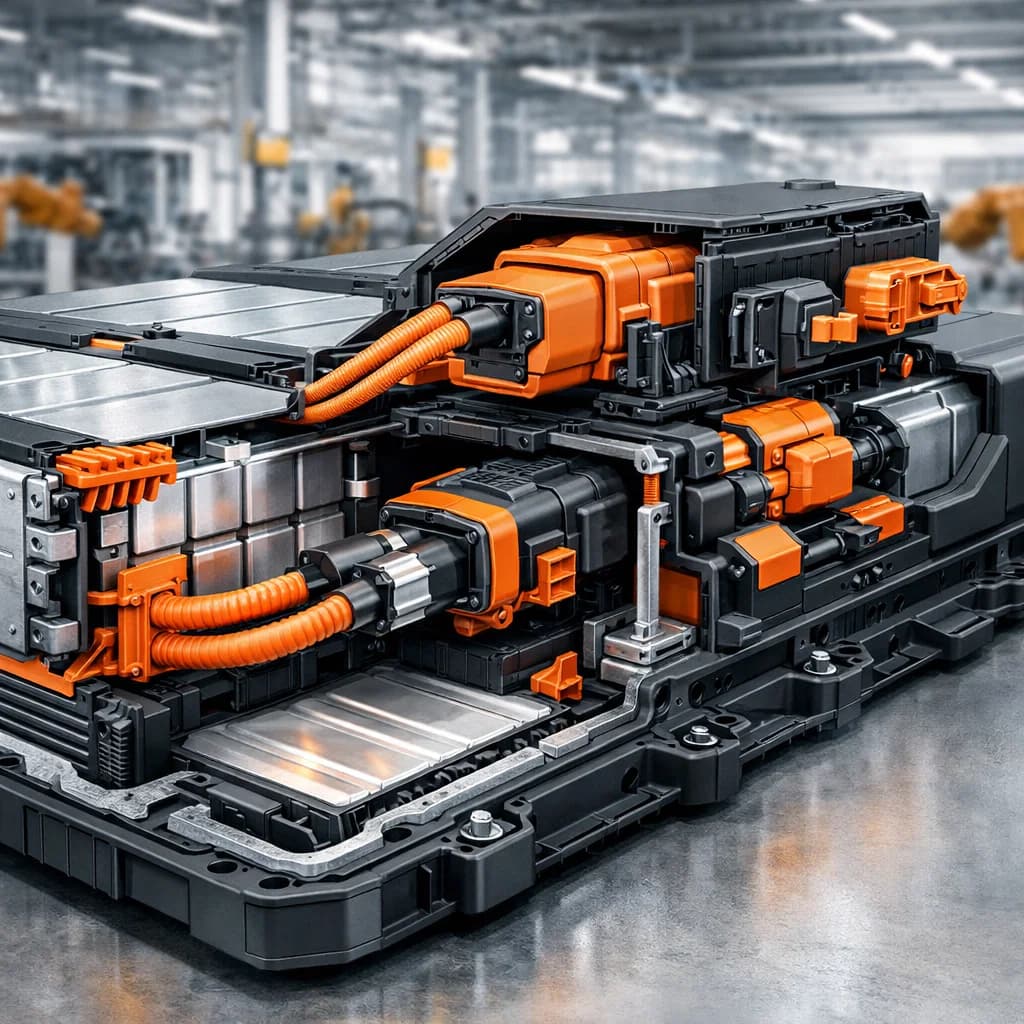
From an engineering perspective, nylon materials are commonly used in battery pack components, high-voltage connector housings, thermal management modules and electric motor peripheral structures. Compared with traditional internal combustion engine vehicles, EV platforms expose materials to different operating conditions. Components near battery modules or electric drive systems often experience continuous operating temperatures above 80–90°C, frequent thermal cycling and exposure to electrical fields.
In such environments, the long-term stability of electrical insulation becomes as important as mechanical strength. For example, high-voltage connector housings must maintain dimensional stability while preventing electrical leakage under high humidity conditions. Similarly, structural supports used around battery packs must resist vibration and thermal aging for the entire vehicle lifetime.
Understanding these engineering conditions helps explain why traditional nylon modification strategies are gradually being reconsidered. In the past, flame-retardant nylon compounds often relied on red phosphorus or halogen-based systems to achieve UL94 V-0 performance. While these solutions remain technically effective, they present potential challenges in modern EV platforms. Red phosphorus systems may introduce corrosion risks in humid environments, particularly when copper terminals are present. Halogen-based flame retardants are increasingly restricted in certain markets due to environmental concerns.
As a result, many compounders are shifting their formulation strategies toward halogen-free flame retardant systems based on phosphorus-nitrogen synergy. These systems often require additional reinforcement technologies to compensate for mechanical property losses caused by flame retardant additives. Mineral fillers or nano-scale reinforcements are sometimes used to improve stiffness and dimensional stability.
Another important trend relates to carbon footprint management. Several automotive manufacturers have started requesting life cycle assessment data from material suppliers. This requirement extends beyond simple mechanical performance evaluation and includes raw material origin, manufacturing energy consumption and potential recyclability.
Read More